Grace stood in the doorway, stunned.
- LongVo
- July 1, 2026
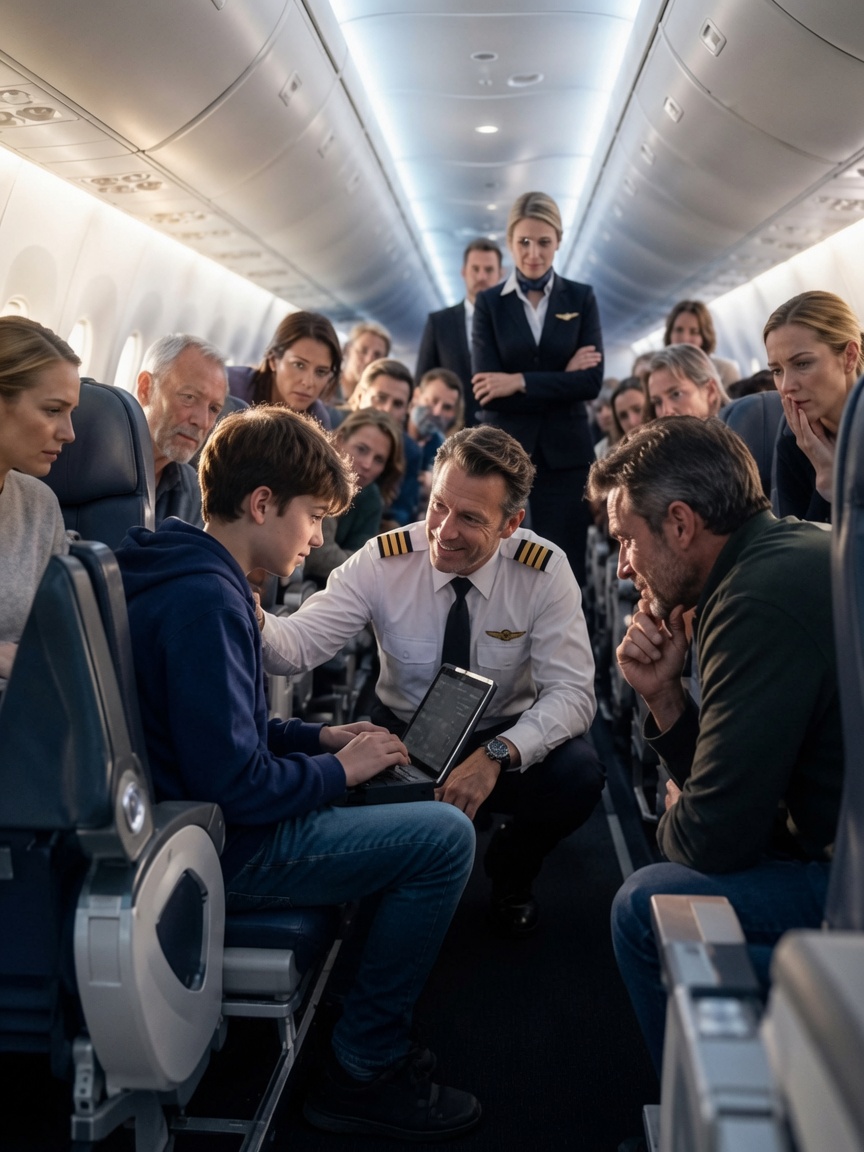
Grace stood in the doorway, stunned.
“You understand all that?”
Malachi didn’t look back at her.
“Yes,” he said simply. “But I need quiet.”
For a second, even the airplane seemed to obey him.
The alarms kept flashing, but the noise no longer felt like chaos—it felt like information. Malachi’s fingers moved to the overhead panel, flipping a switch with careful precision.
“Cabin crew,” he said into the headset, voice steady but young. “Do not open any external vents. Keep oxygen masks down. We may have contamination in the environmental system.”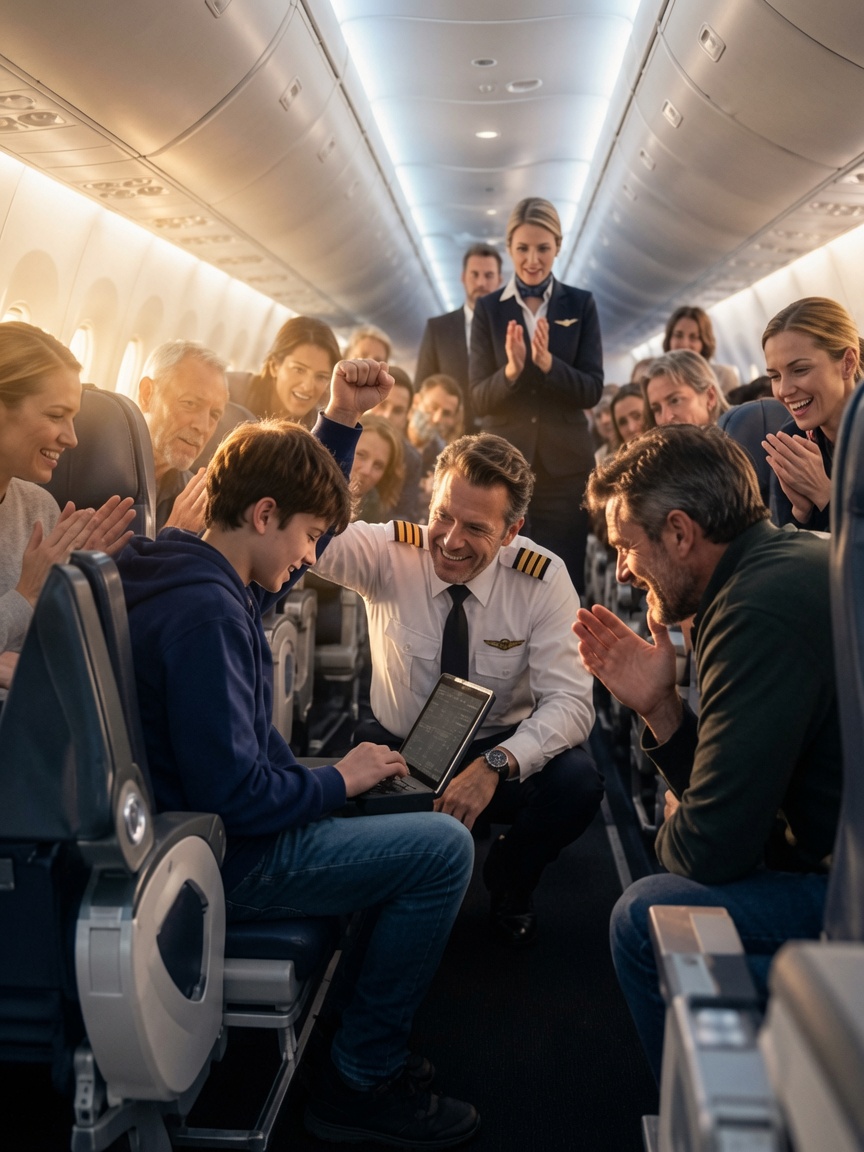
Grace hesitated. “We’re already on masks—”
“I know,” Malachi cut in, not unkindly. “I need you to keep them down anyway. Don’t change anything yet.”
Behind him, the cardiologist leaned closer.
“Kid,” Dr. Reese said carefully, “whatever you’re doing in there—these pilots need help, not theory.”
Malachi finally looked at him.
“I’m not guessing,” he said. “I’ve seen this in simulation three times. And my father made me repeat it until I could do it blind.”
That name again—father—hung in the air like something heavier than altitude.
In the passenger cabin, panic was beginning to fracture into smaller, sharper pieces.
A baby crying.
A man praying too loudly.
Someone demanding to know if they were going to die.
And in first class, Gerald Whitmore was still standing, still unwilling to accept what was happening.
“This is insane,” he barked. “You’re letting a child fly a commercial jet? Do you know who I am? I want—”
“Sit down,” Grace said without looking at him.
He blinked. “What?”
“I said sit down,” she repeated, louder now. “Or I will restrain you myself.”
Something in her voice finally ended the argument.
But up front, Malachi had already stopped hearing them.
His entire world had narrowed to the instruments.
“Autopilot is fighting input,” he muttered. “That means it’s trying to stabilize—but it’s corrupted.”
His hand moved to the flight management system.
“Route is drifting because guidance data is degraded.”
He paused.
Then added quietly, almost to himself:
“That’s why they went down first.”
Grace stepped forward again. “Who went down first?”
“The pilots,” Malachi said. “Not from illness. From exposure.”
A cold silence settled in the cockpit.
Dr. Reese frowned. “You’re saying this was intentional?”
Malachi didn’t answer immediately.
He reached under the console, pulling up a maintenance panel with small, practiced movements.
“I’m saying the bleed air system is compromised,” he said. “And if I’m right… we need to descend. Now.”
Grace’s voice sharpened. “How fast?”
“Emergency descent,” Malachi replied. “To ten thousand. Maybe lower if cabin integrity is affected.”
“That’s too fast,” someone said behind him.
Malachi finally turned his head.
Not angry.
Not afraid.
Just certain.
“If we stay here,” he said, “we don’t make it slow anyway.”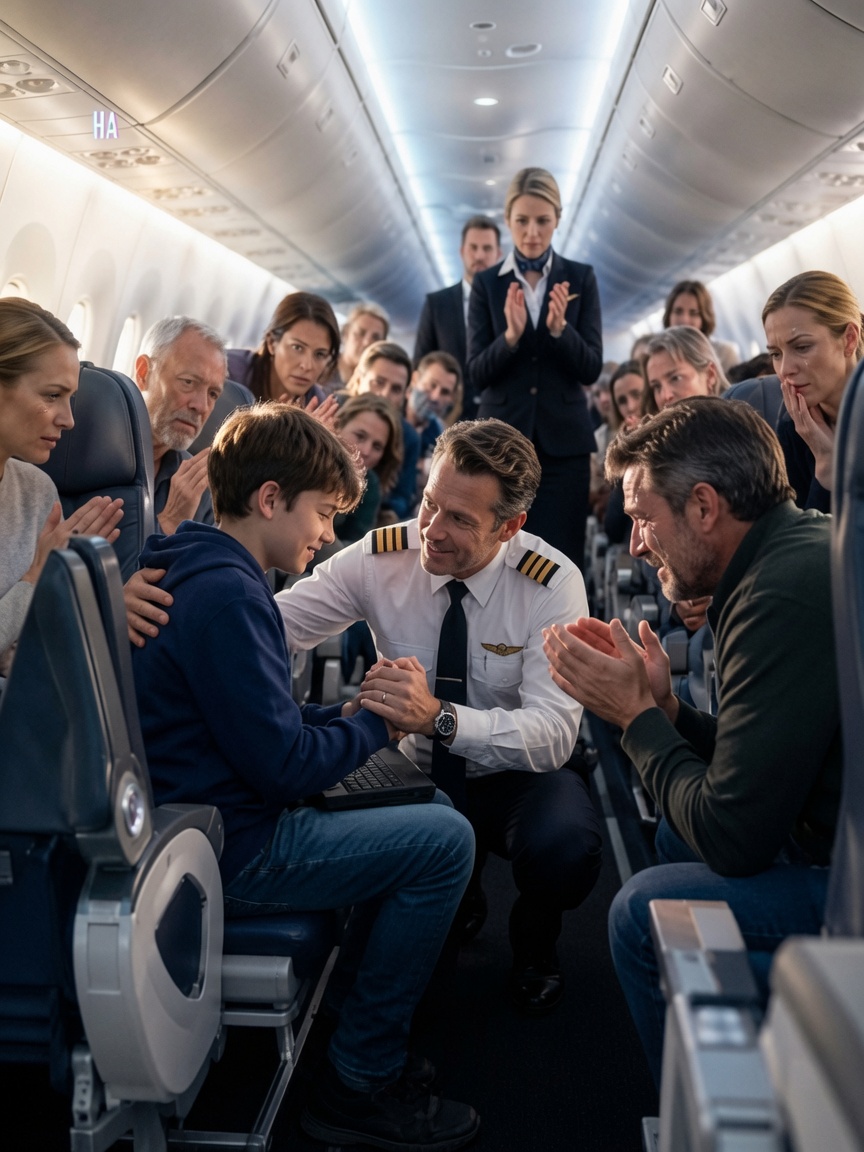
The cockpit fell silent again.
Only the aircraft remained loud.
Wind screaming against metal.
Systems blinking warnings in red and amber.
A machine holding two hundred lives at 35,000 feet like they were a number waiting to be erased.
Grace swallowed hard.
She looked at the unconscious captain.
Then at the first officer.
Then at the boy in the captain’s seat.
And made the decision no manual ever fully prepares you for.
“Do it,” she said.
Malachi nodded once.
His hands tightened on the controls.
“Brace for descent,” he said into the intercom. “This will be rough.”
In the passenger cabin, people began to cry louder.
A few started to pray harder.
And Gerald Whitmore, for the first time in his life, did not have a single word that could change anything.
The plane tipped forward.
And began to fall—on purpose.
But Malachi’s voice stayed steady in the chaos.
“Flight path locked,” he said. “We’re going home.”