The day my daughter walked into court as a lawyer, I couldn’t hold back my tears.
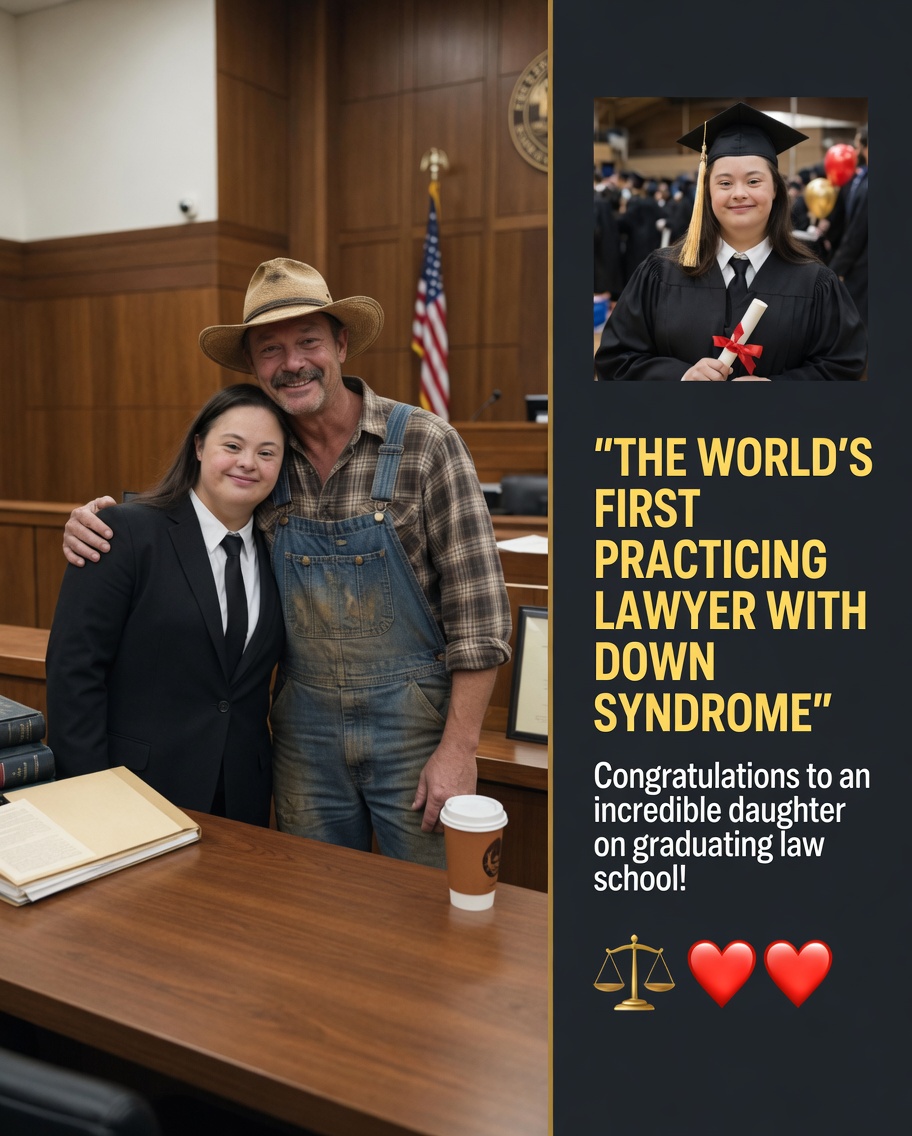
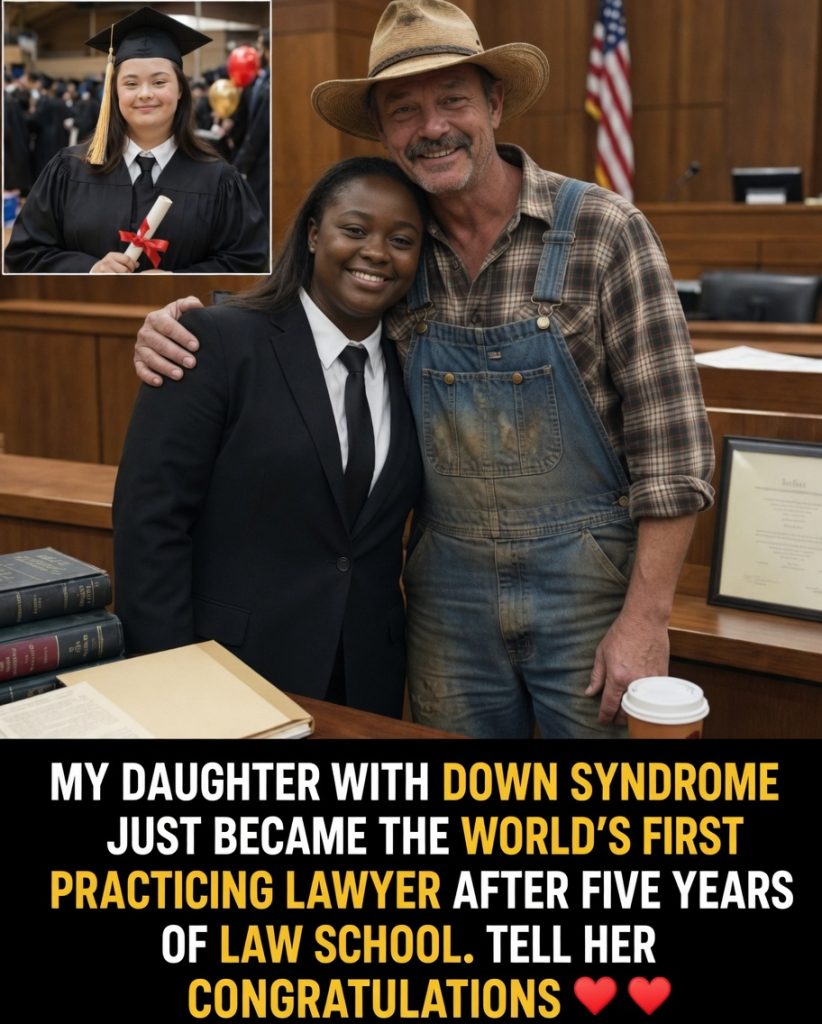
The day my daughter walked into court as a lawyer, I couldn’t hold back my tears. She stood there in her crisp black suit, briefcase in hand, her posture straight and confident. The courtroom buzzed with the usual morning energy—lawyers shuffling papers, clerks calling cases—but for me, everything else faded. Sofia, my beautiful girl with Down syndrome, had just been sworn in as a practicing attorney. People once doubted her. They said law school was “too hard.” They said a girl with Down syndrome could never make it. But Sofia proved them all wrong.
Sofia was born twenty-six years ago on a rainy Tuesday morning. The doctor’s words still echo: “Your daughter has Down syndrome.” In that moment, fear gripped me. As a single father raising her after her mother left when Sofia was only two, I worried about the road ahead. Would she speak clearly? Could she learn? Would the world accept her?
The early years were filled with therapy sessions, doctor visits, and endless paperwork for special education plans. Sofia’s first words came late, but when they did, they carried determination: “Daddy, up!”
By elementary school, the doubts poured in. Teachers gently suggested she might never read beyond a basic level. Relatives whispered that pushing her too hard would only break her heart. “Be realistic,” one uncle said. “Law school? That’s for other kids.” I almost believed them. But Sofia had other ideas. She loved stories—especially courtroom dramas on TV. She would line up her stuffed animals and “defend” them with passionate gestures. Her extra chromosome didn’t dim her curiosity; it fueled a resilience I had never seen.
Middle school brought bullying. Kids mimicked her speech or excluded her from group projects. Sofia came home crying more than once. Instead of shielding her, I taught her to speak up. She joined the debate club as the only student with a disability. Her first debate topic? “Why people with disabilities deserve equal opportunities.” She didn’t win, but the applause was thunderous.
High school tested us both. Sofia refused modifications whenever possible. She stayed up late studying constitutional law excerpts. Her GPA climbed steadily. College counselors advised community college. Sofia applied to a four-year university instead and got accepted.
Law school was the real battlefield. The LSAT took her three attempts. She hired a tutor, filled our kitchen with flashcards, and practiced moot court until midnight. Professors praised her thorough preparation and empathy. Her classmates eventually sought her out for study groups.
Graduation day was emotional. But the bar exam still loomed. After failing the first time, Sofia passed on her second attempt. The celebration that followed is one I will never forget.
Today, Sofia works at a small firm specializing in disability rights and family law. Her first case in court was defending a mother fighting for custody of her autistic son. I sat in the gallery, heart pounding. Sofia’s opening statement was clear, passionate, and backed by exhaustive research. The judge ruled in her client’s favor.
Watching Sofia that day reminded me how far we’ve come. Society still underestimates people with Down syndrome. Yet Sofia’s journey shatters every stereotype. She reads faster than I do now, negotiates contracts with confidence, and mentors younger students with disabilities.
Her success came with support — a village of teachers, therapists, friends, and a stubborn father who refused to lower the bar. But the drive was entirely hers. Sofia taught me that potential is not defined by a diagnosis. It’s built through grit, love, and opportunity.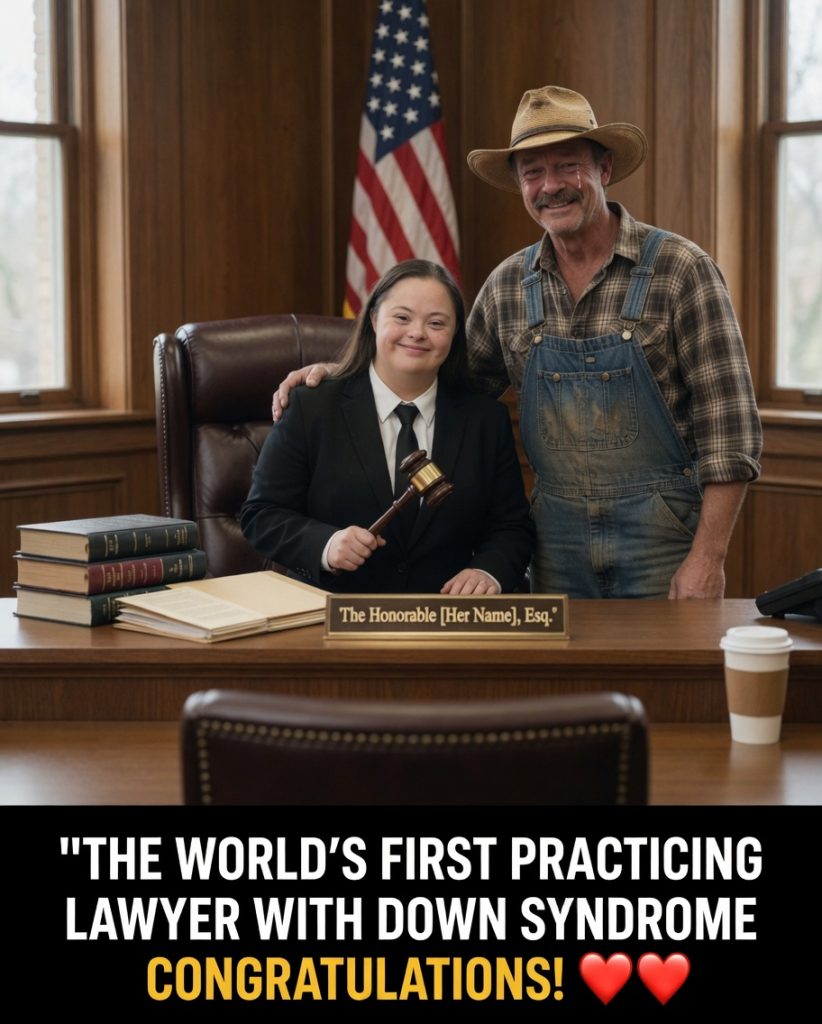
To every parent of a child with special needs: your child’s dreams may look different, but they are valid. To every doubter: watch us rise. Sofia didn’t just become a lawyer — she became living proof that barriers are often just other people’s limits.
As we left the courthouse that triumphant day, Sofia hugged me tight. “Thank you for believing, Dad.” The tears came again, but this time they were pure joy. My daughter, the attorney. The world will never be the same.