Controversial Claim: Teacher Alleges She Was Escorted Out of Classroom for Anti-ICE Video
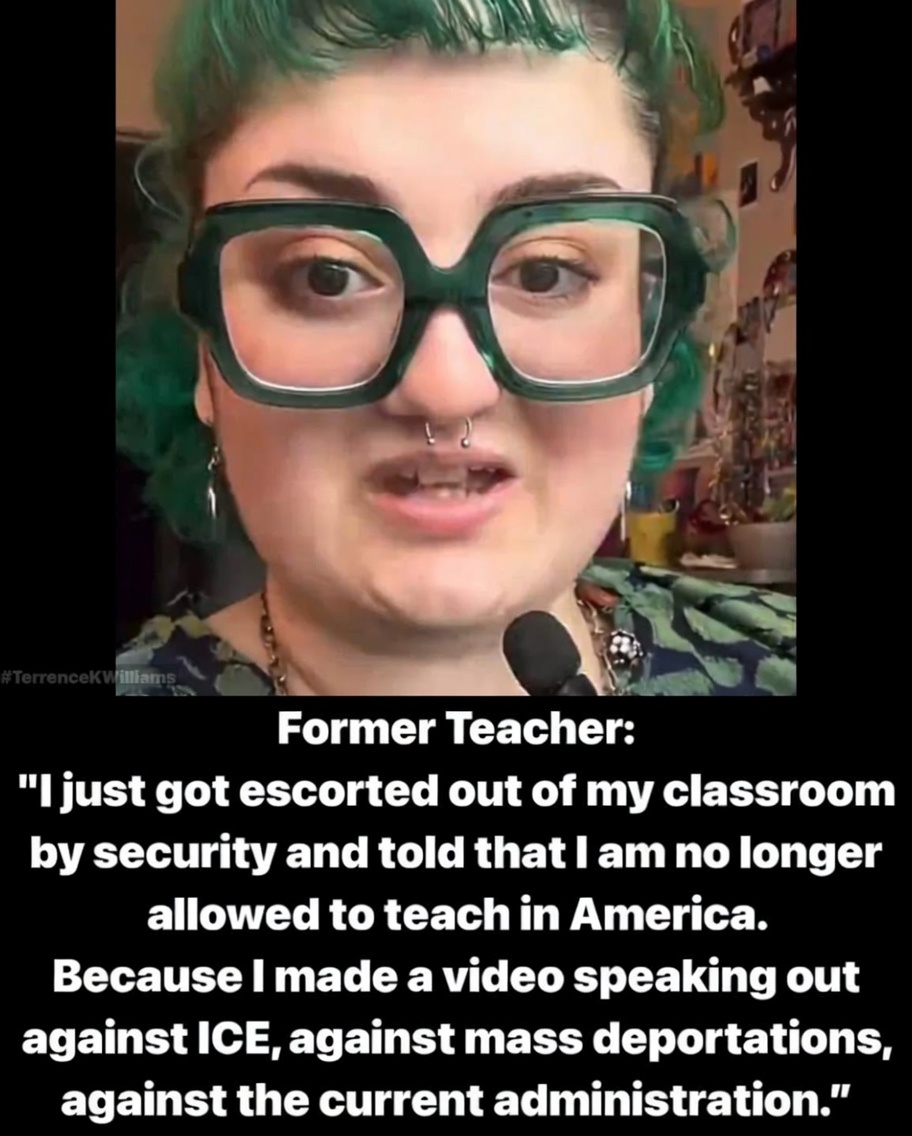
A video circulating widely on social media features a woman identifying as a former teacher claiming she was removed from her classroom by security and barred from teaching in the United States after posting content criticizing U.S. Immigration and Customs Enforcement (ICE), mass deportations, and the current administration.
In the clip, the woman with green hair and distinctive glasses states: “I just got escorted out of my classroom by security and told that I am no longer allowed to teach in America. Because I made a video speaking out against ICE, against mass deportations, and against the current administration.” The post has been amplified by conservative commentator Terrence K. Williams and shared across platforms like Facebook and Instagram.
As of now, the claim has not been independently verified by major news outlets with specific details such as the teacher’s full name, school district, location, or official statements from administrators. It appears primarily in partisan social media discussions, where reactions range from outrage over alleged censorship to support for holding educators accountable for classroom conduct.
Context of the Broader Debate
The United States is currently experiencing heightened immigration enforcement under the Trump administration, including expanded deportation operations. This has sparked intense national debate, particularly in education circles, where some teachers have expressed concerns about the impact on immigrant students and families.
Critics of the teacher’s alleged actions argue that public schools should remain neutral learning environments and that using classroom time or influence to advocate political positions—especially on sensitive topics like immigration—crosses professional boundaries. Supporters view the incident (if true) as an example of political retaliation against free speech.
Teachers’ unions and advocacy groups have previously highlighted challenges educators face amid immigration raids, including student trauma and community fears. However, school districts generally maintain policies prohibiting the use of instructional time for partisan advocacy.
Questions Remain
- Was the removal tied directly to the video, or were there other factors such as curriculum complaints or policy violations?
- Did the teacher involve students in political discussions, as suggested in some related viral posts?
- What legal recourse, if any, does a public school teacher have in such situations under First Amendment precedents for government employees?
This story highlights the deep polarization surrounding immigration policy in America today. Without official confirmation from the school or district involved, the incident remains an unverified personal account gaining traction online. Further reporting will be needed to establish the full facts.