Wendell didn’t move for a moment.
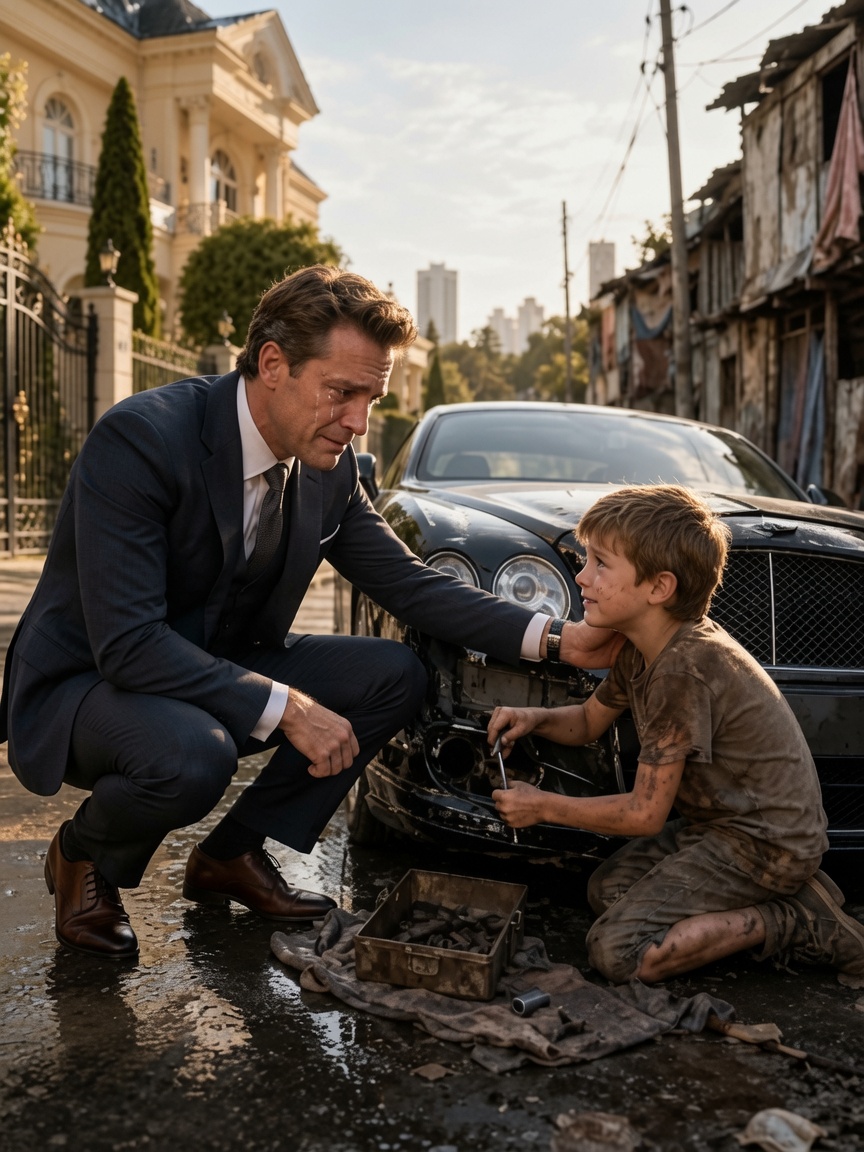
Wendell didn’t move for a moment.
The engine idled like it had never died. Like the last twenty minutes of panic had been something he imagined under the Alabama sun.
He looked at the boy again.
Jaylen was already wiping his hands on his jeans, like the job was finished and there was nothing special about it. No smile. No expectation. No waiting for praise.
Just… done.
“You fixed a three-hundred-thousand-dollar car with a piece of wire,” Wendell said quietly.
Jaylen shrugged. “It’s not the price that breaks it. It’s usually something small.”
That sentence landed harder than it should have.
Wendell glanced down at the pouch again—the sandpaper, the brush, the cheap tools that somehow understood his vehicle better than an entire roadside assistance system.
“What do I owe you?” Wendell asked.
Now Jaylen finally looked up.
“Two dollars,” he said.
Wendell blinked. “Two… dollars?”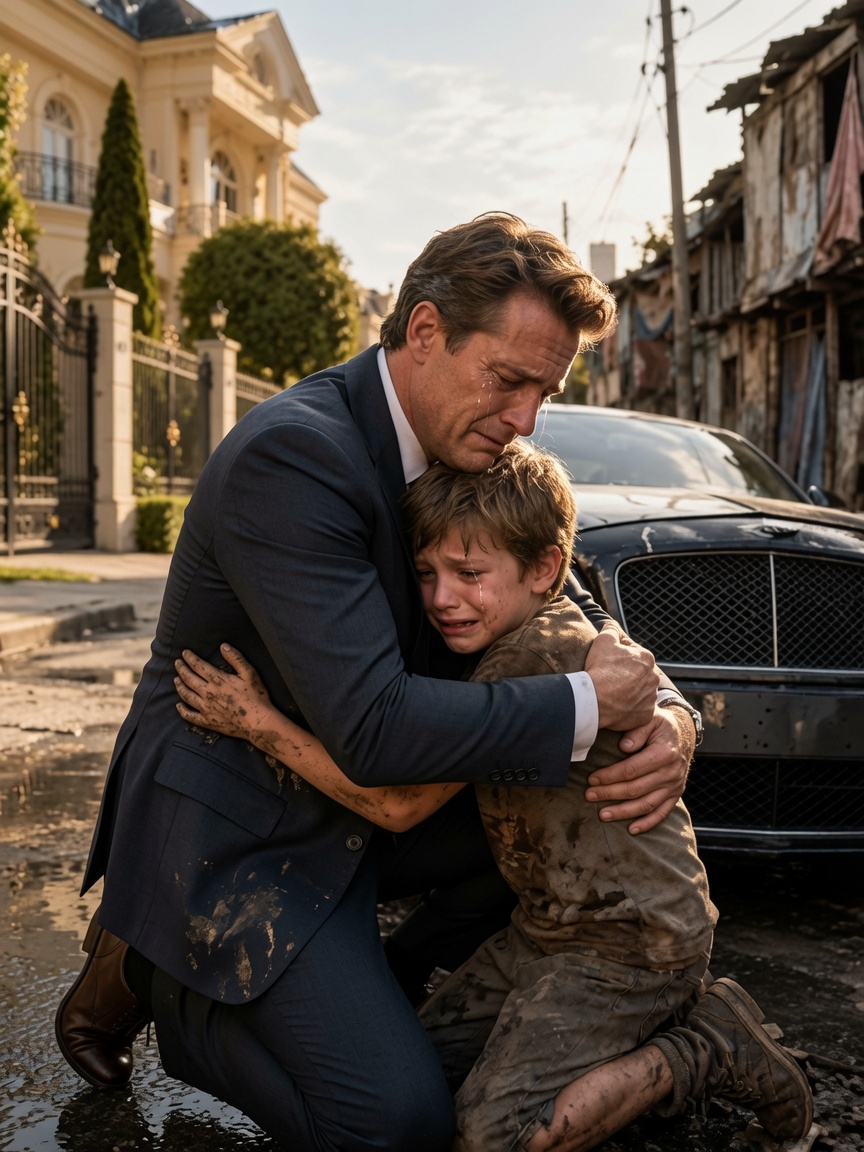
“For the wire and tape,” Jaylen added, as if that explained everything.
Wendell almost laughed, but it caught in his throat. “You just saved me from missing a board meeting that controls a billion-dollar acquisition.”
Jaylen didn’t react to that either. “Then you should go.”
He turned slightly, like he was already done with the conversation.
That’s when Wendell noticed something else.
The boy wasn’t just poor.
He was careful.
Not in a shy way—in a practiced way. Like every word he spoke had to pass through an invisible filter of necessity before it came out.
Wendell reached into his wallet.
He pulled out a card.
Not a business card.
A black titanium membership card that most people only saw in magazines and online rumors. Unlimited access. Private services. Global privileges.
He held it out.
“Take this,” Wendell said. “If your skills are this good, you don’t belong fixing cars on dirt roads.”
Jaylen didn’t take it.
“I don’t need plastic,” he said.
“It’s not plastic,” Wendell corrected automatically.
Jaylen finally looked directly at him. “Still doesn’t feed my aunt.”
That stopped everything.
Wind moved through the trees. A distant crow called once, sharp and uninterested.
Wendell lowered the card slightly. “Your aunt?”
Jaylen hesitated. Just a fraction.
Then, as if deciding there was no harm in the truth, he said, “She’s sick. I take care of her. I fix things around here so we don’t lose the house.”
Wendell looked past him for the first time—really looked.
The road wasn’t just empty.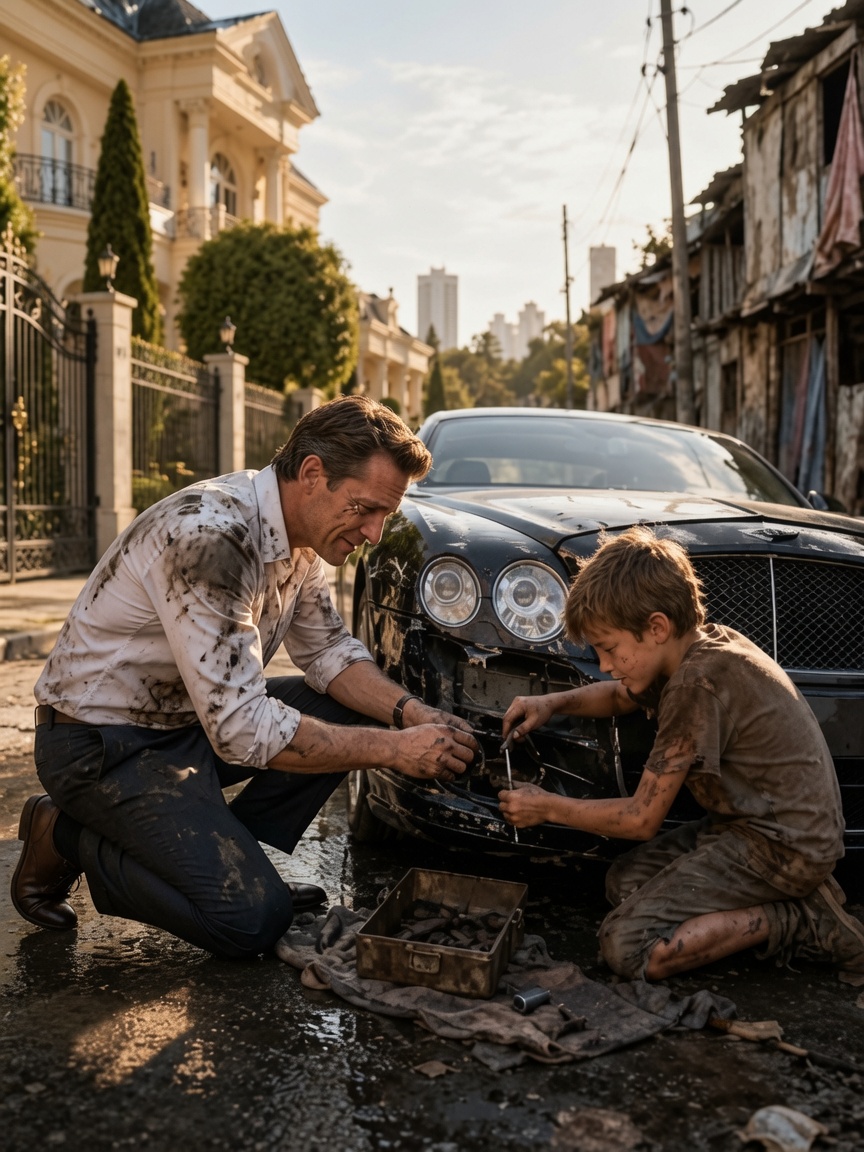
It was abandoned.
A rusted trailer half-hidden behind trees. A mailbox bent sideways. A yard that had stopped trying to look like a yard a long time ago.
And suddenly the boy didn’t look like a “talent.”
He looked like survival.
Wendell closed his wallet slowly.
“Where did you learn all that?” he asked again, but softer this time.
Jaylen kicked a stone with his slide. “Internet when it works. Old manuals from the library. Some guy on YouTube who talks too much.”
“What’s your dream, Jaylen?”
That made him pause.
For the first time, the boy looked like a kid instead of a mechanic.
“I don’t know,” he admitted. “I just don’t want things around me to stay broken.”
Something shifted in Wendell’s expression.
Not pity.
Recognition.
Because for a second—just a second—he saw himself before the billions. Before the suits. Before the boardrooms.
A kid who fixed broken things because nobody else came to do it.
Wendell turned toward his SUV, then stopped.
He reached into the back seat and grabbed his phone. The signal bar flickered—barely alive now that the engine was running.
A few swipes.
A call.
“Cancel my flight,” he said. “And move the board meeting. I’ll join remotely.”
Pause.
Then: “No. Not later today. Move it tomorrow.”
He ended the call.
Jaylen watched him carefully. “You’re still leaving.”
Wendell looked at the road ahead, then back at the boy.
“I am,” he said. “But not because of them.”
He reached into his car again, pulled out a bottle of cold water, and handed it over.
Jaylen took it cautiously.
Wendell then did something he hadn’t done in years without calculation.
He made a decision without profit attached to it.
“Come with me,” he said.
Jaylen frowned. “Where?”
“Somewhere your skills won’t be worth two dollars,” Wendell said.
The boy gave a small, skeptical laugh. “People like you don’t take people like me anywhere.”
Wendell nodded once.
“You’re right,” he said. “Usually I don’t.”
Then he added, “That’s why this time is different.”
For the first time, Jaylen didn’t have an answer.
Only silence.
And in that silence, Wendell Hayes realized something uncomfortable:
His car hadn’t just broken down on that road.
He had.