Behind Every Soldier’s Uniform: A Photo, a Prayer, and a Love That Crosses Oceans
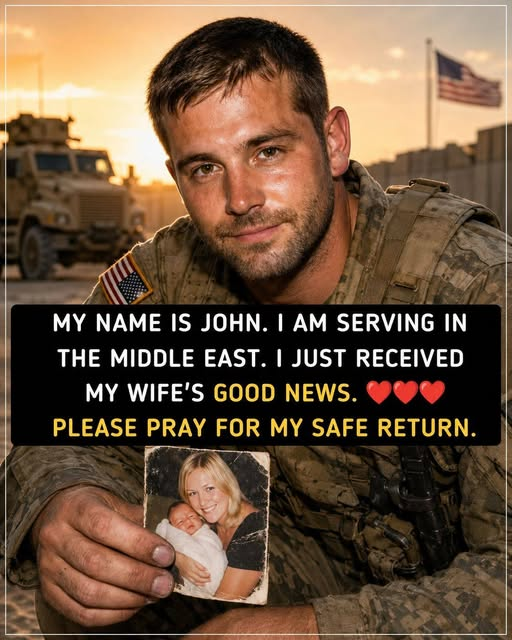
Behind every soldier’s uniform is a family praying every night for one safe return home.
Far away from home, this brave soldier continues serving his country while carrying the most emotional news close to his heart. The photo in his hand is not just a picture — it is a reminder of the family waiting for him, the love that keeps him going through long deployments, sleepless nights, and the heavy weight of duty. In the quiet moments between missions, when the desert dust settles or the barracks grow still, he pulls it from his pocket, traces the faces with his thumb, and finds the strength to keep moving forward.
Meet Sergeant Marcus Reynolds, a 32-year-old U.S. Army infantryman currently deployed in the Middle East. For the past seven months, he has led patrols, trained allied forces, and stood watch over volatile regions. On the surface, he is the picture of discipline — broad shoulders, steady gaze, and the calm confidence of someone who has trained for every scenario. But tucked inside his tactical vest is a worn photograph that tells a different story: his wife Elena smiling brightly beside their two children, six-year-old Mia and four-year-old Lucas, on the front porch of their small home in Texas. The image was taken the day before he left. Elena’s eyes shine with pride mixed with the quiet fear she tried to hide. Mia holds a handmade card that reads “Daddy come home soon,” and Lucas clutches his favorite toy truck, unaware of how long “soon” would feel.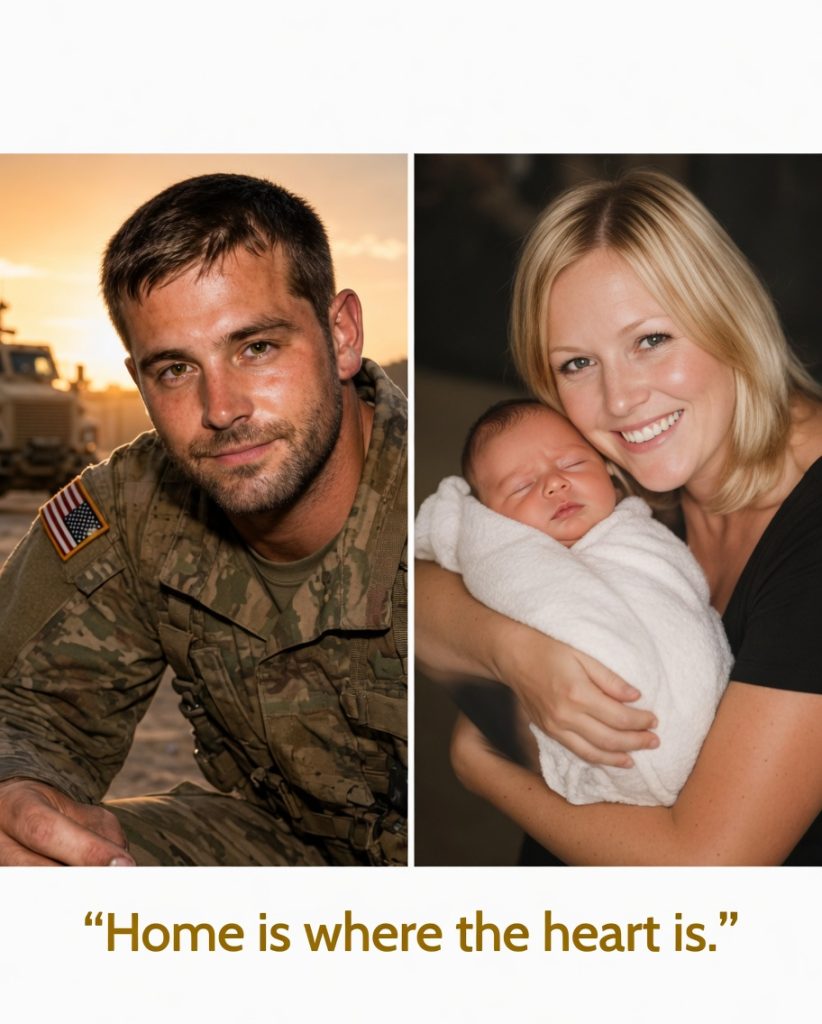
That photo has traveled thousands of miles with Marcus. It has survived sandstorms, rain-soaked missions, and the occasional mortar threat. “It’s my why,” he says in a rare video call home, his voice cracking slightly. “Every time things get hard, I look at them and remember what I’m fighting for. Not just the flag or the mission — but bedtime stories I’m missing, scraped knees I can’t kiss, and the way Elena still laughs at my bad jokes even when she’s exhausted.”
Military families understand sacrifice in ways most civilians never will. While Marcus serves overseas, Elena manages the household alone. She is both mother and father, teacher and comforter, while working part-time and volunteering at the local veterans’ support center. She coordinates school drop-offs, doctors’ appointments, and soccer practices while checking her phone constantly for any message from her husband. The children ask about Daddy every day. Mia draws pictures of airplanes bringing him home. Lucas sleeps with one of Marcus’s old T-shirts because it still smells like him.
The emotional news Marcus carries is layered. Just weeks before this latest deployment, Elena discovered she was pregnant with their third child. The joy of new life collided with the pain of separation. Marcus learned he would become a father again while standing on foreign soil, unable to attend appointments or feel the first kicks. The ultrasound photo now sits behind the family picture — two images layered together like the dual realities he balances: duty and devotion.
This is the hidden cost of service. According to military studies, prolonged deployments strain marriages, challenge children’s emotional development, and test even the strongest families. Yet through it all, love finds ways to endure. Elena sends care packages filled with homemade cookies, children’s drawings, and voice recordings of bedtime stories. Marcus calls whenever satellite connections allow, reading stories to the kids over crackling lines and promising he’ll be home before the new baby arrives.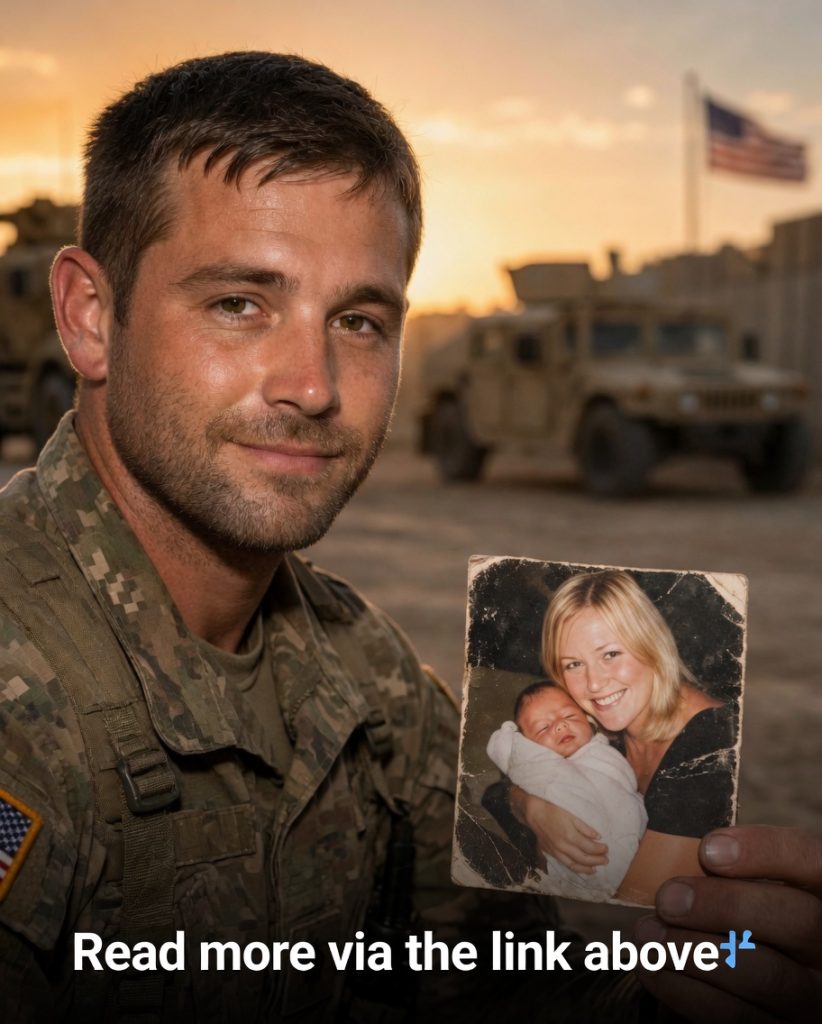
The photo in his hand has become more than a memory — it is a lifeline. Soldiers across history have carried similar talismans: letters from sweethearts, locks of hair, small Bibles, or children’s drawings. In modern times, digital versions fill phones, but nothing replaces the physical weight of paper touched by loved ones back home. Marcus says the edges are fraying now, but he refuses to laminate it. “I want to feel the same paper their hands touched,” he explains.
Their story is one of millions. Every service member — whether in the Army, Navy, Air Force, Marines, or Coast Guard — carries invisible threads connecting them to families back home. Spouses who become single parents overnight. Children who grow up too fast, learning words like “deployment,” “ redeployment,” and “freedom isn’t free.” Parents who age with worry each time the news reports casualties. Grandparents who pray rosaries or light candles. Behind the uniforms, the medals, and the disciplined marches are ordinary people bound by extraordinary love and sacrifice.
Communities often step in to bridge the gap. Neighbors mow lawns for deploying families. Schools host “Daddy’s home” celebrations. Churches and organizations send support. Yet the deepest strength comes from within the family itself — the nightly prayers, the shared videos, the promise that “this too shall pass.”
Marcus’s unit recently faced a difficult mission that tested everyone. In the aftermath, as adrenaline faded and exhaustion set in, he found a quiet corner and pulled out the photo again. Tears came — not from weakness, but from the pure force of missing his family. He whispered a prayer of gratitude for their safety and another for his own return. Moments like these humanize the hero. They remind us that even the strongest warriors need something soft to hold onto.
Elena keeps a matching photo on her nightstand. Each night she tells the children, “Daddy is being brave so we can be safe.” She plays Marcus’s last voice message on repeat when the house feels too quiet. Their love is not glamorous or cinematic — it is forged in separation, strengthened by faith, and sustained by small daily acts of remembrance.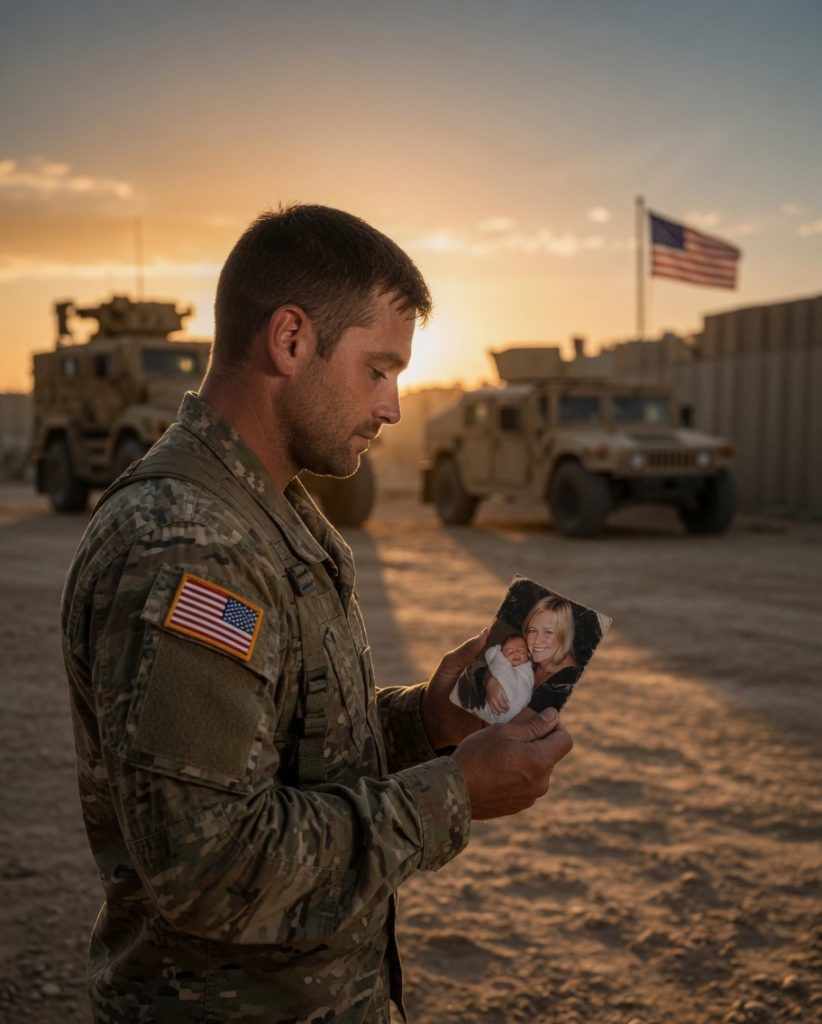
As Marcus’s deployment nears its end, hope grows stronger. The new baby is due shortly after his return. Plans for a simple homecoming — balloons, homemade signs, and tight hugs that last for minutes — keep the family motivated. They know reintegration brings its own challenges: adjusting to routines, healing emotional distance, and learning each other again. But they also know their bond has already survived the hardest test.
This soldier’s story calls us to deeper appreciation. Next time you see someone in uniform at the airport, grocery store, or parade, remember the families behind them. The late-night worries. The empty chairs at dinner tables. The prayers whispered into pillows. Support military families through care packages, listening ears, or simple thank-yous. Advocate for better support systems, mental health resources, and policies that honor the full weight of service.
To every soldier far from home: your sacrifices do not go unnoticed. The photo in your hand, the letters in your pack, the memories in your heart — they are powerful fuel. Keep carrying them. Keep fighting for the world that allows your family to sleep safely at night.
To every waiting family: your strength is the unseen backbone of our nation. Your prayers, patience, and resilience matter more than you know.
The photo is just paper and ink, yet it holds an entire universe of love. It proves that distance cannot break what the heart refuses to release. One day soon, Sergeant Marcus Reynolds will walk through his front door, drop his duffel bag, and wrap his arms around the faces he has carried with him for so long.
Until then, the prayers continue. The love endures. And behind every soldier’s uniform beats a heart that never stops missing home.